We start the RAG development lifecycle with
business alignment and data understanding. The team performs Knowledge mapping across 10k–1M+ data
points and defines use cases to guide the AI implementation process and solution direction.
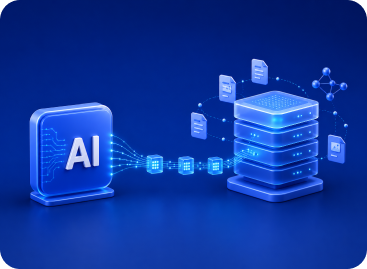
We design system structure during the AI
implementation process and prepare data pipelines. This phase defines retrieval pipeline design,
selects tools, and aligns architecture with Large language models, Natural language processing,
and scalable data readiness strategies.
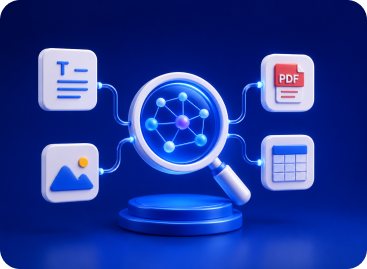
We build pipelines within the RAG development
lifecycle using optimized retrieval pipeline design. The system ensures Retrieval pipelines
optimized for high recall and precision and supports large-scale indexing for enterprise search
applications.
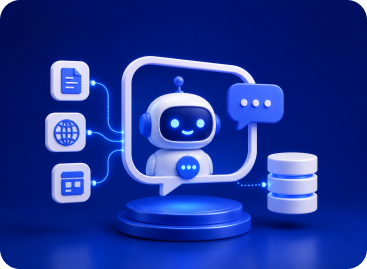
We integrate large language models with LLM embeddings
and structured prompts. This stage uses Natural language processing to design accurate response
generation and align outputs with user queries and domain knowledge.
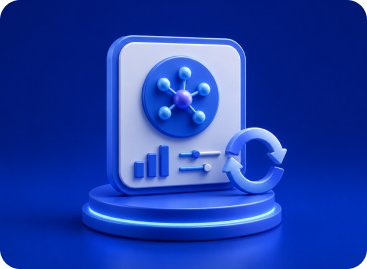
We follow the AI implementation process with iterative
updates and testing cycles. The team refines models and pipelines within the RAG development
lifecycle using continuous feedback loops to improve retrieval accuracy and system performance.
We validate outputs using structured QA processes
within the RAG development lifecycle. The system checks groundedness, evaluates accuracy, and
ensures responses align with retrieved data and LLM embeddings logic.
We complete deployment using the final stage of the
7-step RAG development lifecycle from discovery to deployment. The system includes monitoring,
performance tracking, and continuous updates within the AI implementation process for long-term
optimization.